About the platform
About Praxikon
Praxikon is a free knowledge platform on the GDPR and the EU AI Act. It turns both regulations into what you have to do and have to be able to show: the official text of each article, searchable and with the overlap between both laws, the obligations that apply to an AI system, the actions and evidence that belong with them, and what a regulatory change does to all of that. Every answer traces back to the official EU source, with version and date.
This definition is worded identically on the homepage, in the page metadata, in the structured data and in the files for AI crawlers. One wording across every surface, so there is something to cite instead of four near-versions.
All knowledge here is open access, without an account, for lawyers and compliance teams as much as for the AI models that cite it.
Why Praxikon exists
There is no shortage of opinions about the GDPR and the AI Act. Every week brings another summary, roadmap or warning, and at the edges those pieces contradict each other. What is missing is evidence: which rule applies, where exactly it says so, which edition of that source was read, on what date, and how you show a year from now that this is what you knew at the time.
An organisation that has to account for its use of AI gets little out of a text that is right while you read it and quietly changes afterwards. It needs a statement it can cite: with an identifier that is never renamed, a version that is fixed, and a trail back to the official text.
Praxikon is built for the second thing. Not another explanation of the Regulation, but the layer underneath it: the objects an explanation can rest on, in a form a human reads and a machine retrieves.
Mission and vision
The mission
To make the regulation traceable and reproducible, for humans, software and AI agents in the same move. Traceable means every published statement carries the official source it rests on, down to the paragraph, with edition version and verification date. Reproducible means the same question against the same release of the dataset returns the same answer, even after the regulation has moved on.
The vision
To become the reference layer others point at, instead of every adviser, every tool and every language model modelling the Regulation again and inventing its own keys along the way. That takes exactly what makes a reference a reference: identifiers that are never renamed or reused, versions that stay fixed, corrections that are visible rather than quietly overwritten, and a public interface where software reads the same objects as the page in front of you.
What that is not
A direction, not a commitment. There is no service level on the public interface today, nothing is delivered to you, and the platform passes no judgement on a system running at your organisation. Anyone who wants a notification fetches it themselves. We would rather say so here than have you find out along the way.
Regulation as infrastructure
Behind every answer sits a knowledge graph rather than a text page. Every object carries a stable identifier, a version and a hash, and points to the official EU source it came from.
A correction overwrites nothing: it is a new version with a later date. A citation from last month therefore stays verifiable, even after the regulation has moved on.
Software and AI agents read exactly the same objects through the public API as the page you are reading now. One dataset, two readers, no second truth.
The layers, from source to answer
Below is in reading form what the walkthrough shows on a real case. If you would rather look than read, take that page: an employer having job applicants ranked goes through every layer there, with the output of the running engine printed under each step.
The source layer
Official texts and documents are registered as objects of their own: which edition, which locator, and when we looked at it. That record gets a fingerprint. It is not an archive copy of the document itself, and the official source always prevails over our summary of it.
The knowledge graph
Above that sit the objects: obligations, actions, evidence, definitions and changes. Each carries a stable identifier, a version, a hash over its content and the citations into the source layer. The content is bilingual before anything is displayed, so language is presentation and not a second content.
The decision layer
A fixed set of coded answers enters the assessment and a classification comes out, with the rule trace underneath: which rule was met, which was not, and why. There is no language model in between. What fell outside the assessed set is stated, because not assessed is different from not applicable.
The manifest
That same assessment fits in a document you can archive or send along, carrying the dataset version, the source fingerprints used, the assessed obligations and a hash over the whole. The same input against the same release produces that document again, byte for byte.
The impact layer
Regulatory changes are objects in their own right, with two dates: when the law moved and when we knew it. An existing manifest can be held against a window between two releases. The outcome is a status with a next step, not a score and not a percentage.
The exits
On top of those layers sit two exits: the page you are reading, and the public interface where software and AI agents retrieve the same objects. Both project from the same graph, so they cannot drift apart without the dataset itself changing.
The evidence behind this promise
Everything above is a claim until you can check it. This is where you can.
The methodology
How a statement enters the graph, how interpretation stays separate from legal text, what each review status means, and when something is reassessed.
Read the methodologyThe correction register
A substantive error is not quietly overwritten. Every material correction sits in the public register with its date and explanation, next to the release it landed in.
See the correctionsThe ontology and the stability contract
The shape of every object type, the identifier policy, the two time axes and the citation format are written down in the documents ONTOLOGY.md, VERSIONING.md and LEGAL-MODEL.md. Their published projection is the JSON-LD context, which you can open right now.
Open the JSON-LD contextThe public interface
Per obligation the citations with locator, source URL and the European ELI identifier, plus the dataset version you are reading against. The contract sits in the OpenAPI document.
See the OpenAPI documentWhat Praxikon stands for
The platform sells no advice, no implementation and no training of its own. That separation is deliberate: a source that also wants to win the engagement reads differently from one that does not have to.
Source-traceable or it is not here
Every obligation carries the location it rests on, down to the paragraph. Where we interpret, it says so, kept separate from the legal text itself.
Open knowledge, machines included
Pages, the implementation map, the answers and the public API are freely accessible and citable. Only downloadable files ask once for a business email address.
Deterministic, no language model
Answers are assembled from versioned objects in the knowledge graph. There is no generative model in between that could invent a plausible-sounding sentence.
Date and release attached
Every answer shows when it was checked and which release of the dataset it came from. Without that stamp a citation cannot be reproduced.
How you can check this
Reliability you have to take on our word is not reliability. This is what you can verify yourself:
- The public API returns the citations per obligation, with the exact location, the source URL and the European ELI identifier.
- The source register with every answer names the publisher, the edition version and the verification date, so you know which edition was used.
- The methodology describes how a statement enters the graph and when it is reassessed.
- The fingerprint on a source states what it covers: our record of the source, not an archive copy of the external document.
What the platform holds
State of the knowledge graph right now. These 14 source records are the editions the worked-out obligations cite. The guidance overview counts 59 separate official documents: that wider library also holds guidance not yet tied to any obligation. See the guidance overview
Implementation map
Determine per AI system or GPAI model which routes apply, with timing, actions, evidence and open questions. No account, the dossier stays local.
Direct answers
Ask a plain-language question and get the conclusion, the first actions and the official source. Assembled from the graph, not generated.
Monitor and changes
What materially changes in the rules, with status and source attached, so you can see what calls for reassessment.
Enforcement per member state
Designated authorities, implementing legislation and dated enforcement events for all 27 member states.
Evidence and templates
Registers, checklists and documents per obligation, editable and ready to use.
Public API and llms.txt
The same knowledge machine-readable, with stable object IDs, versions and citations, so an AI agent can reference it correctly.
Praxikon, Embed AI and LearnWize
Praxikon is the neutral knowledge and decision layer. It sells no advice, no implementation and no training of its own, and it recommends no supplier inside an answer. That is not modesty but a condition: a layer a third party dares to build on cannot at the same time compete for the engagement that follows from its own answer.
Execution sits with two brands by the same maker, and that separation is stated here so you know what you are reading. Embed AI does the work, LearnWize does the training. Both read the same public objects you do: there is no second dataset behind a door, and no place in an answer that is for sale.
Embed AI
For compliance, legal, risk and IT
Governance, AI register, classification, FRIA and the evidence file, guided in a fixed approach.
See the Embed AI approachLearnWize
For HR, L&D, training providers and programme managers
Role-based learning paths and assessment under Article 4, with certificates and an audit-ready file per employee.
See LearnWizeWho writes this

Zahed Ashkara
Founder, Praxikon
Lawyer and AI governance specialist · Certified AI Compliance Officer (CAICO) · Member NEN standards committee AI & Big Data
Zahed helps organisations use AI responsibly: from risk classification and governance to AI literacy on the work floor. He works with organisations across HR, education, healthcare, finance and government, translating the AI Act into concrete steps and evidence that holds up for internal review, regulators and leadership.
Beyond this platform, Zahed is the founder of LearnWize, which organisations use to train, test and demonstrate responsible AI use role by role, and of consultancy Embed AI, a training institution recognised by the Netherlands Bar (NOvA). As a member of the NEN standards committee Artificial Intelligence & Big Data, he also contributes to the standards that future AI Act audits will be based on.
View Zahed’s expert profileWhat Zahed works on day to day
Speaker and trainer
Zahed regularly gives presentations and training sessions on AI governance, the EU AI Act and responsible AI use. Every audience is different: municipal officials have different questions than lawyers or IT security teams.
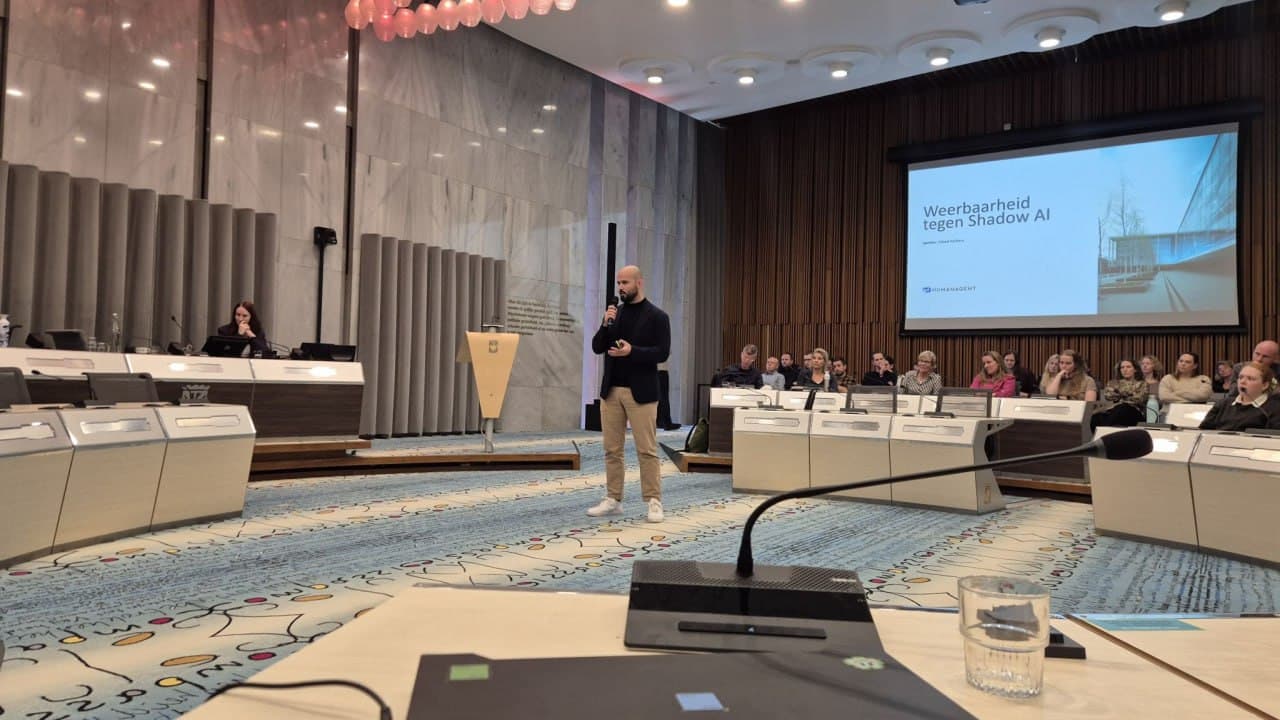
Gelderse AI-dag, Stadhuis Arnhem
Session on digital resilience and Shadow AI for municipal officials at the Gelderland AI Day

Microlab Den Haag, GPT voor jurisprudentie
Demo of a custom GPT for case law analysis, for lawyers and legal professionals
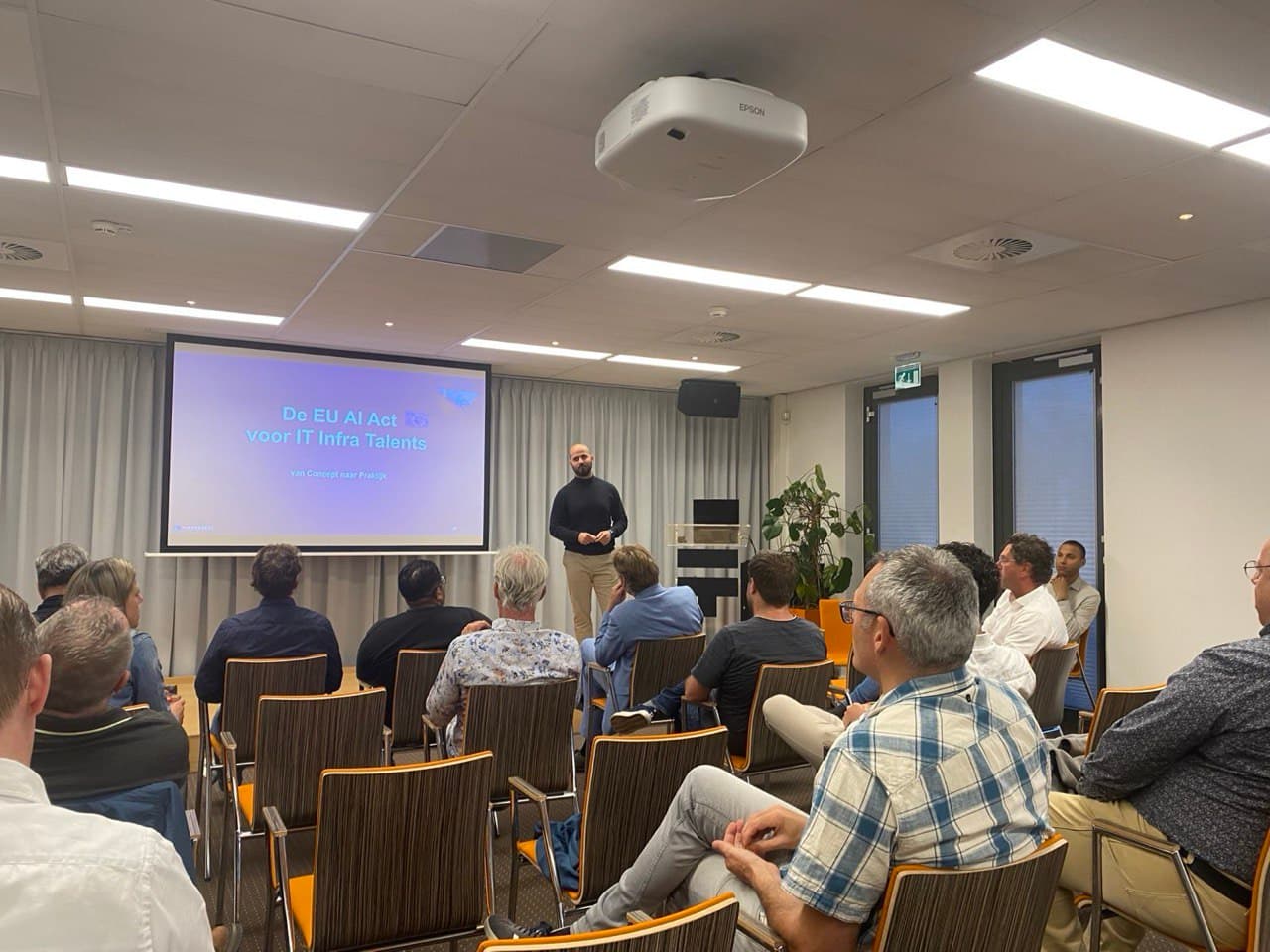
IT Infra Talents
Presentation on the EU AI Act for IT infrastructure and security professionals
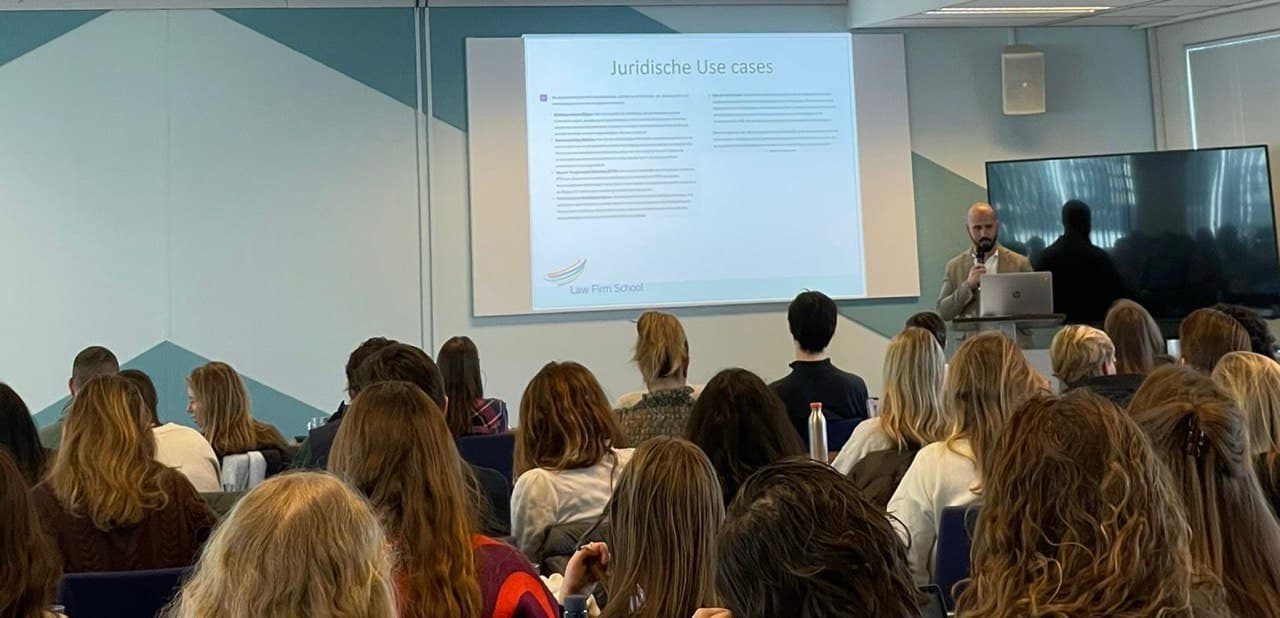
The Law Firm School
Training on legal AI use cases and responsible use for lawyers and legal professionals
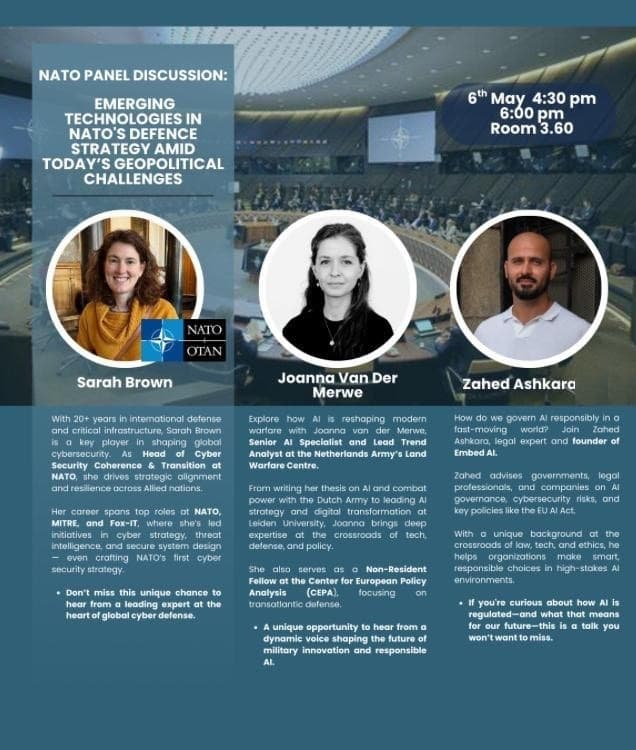
NATO panel: Emerging Technologies & Defence Strategy
Panel discussion on AI governance in a fast-moving world and the role of the EU AI Act
Stay informed about the AI Act
Receive our newsletter with practical updates on the EU AI Act, enforcement and AI governance.
Work and personal addresses welcome · No spam · Unsubscribe anytime
Found an error, or have a question about the platform
A wrong reference, a missing source or an obligation that could be sharper: those reports are welcome and get followed up. For running an engagement we point you to Embed AI or LearnWize.